Department of Water Resources and Environmental Engineering
Advancing sustainable water resources management, climate resilience, and environmental protection through rigorous instruction, research, and innovation.
History and Development of Water Resources Engineering Program
The Department of Water Resources and Environmental Engineering at Aliko Dangote University of Science and Technology (ADUSTECH), Wudil, commenced its undergraduate programme in the 2018/2019 academic session to address the growing demand for skilled engineers in water resources management and environmental sustainability. Student enrolment grew from 48 at inception to approximately 120 by the 2022/2023 academic session. The Department graduated its pioneer set of 13 students in the 2024/2025 academic session.
The Department combines theoretical instruction with practical training in hydrology, hydraulics, irrigation and drainage, water supply, wastewater engineering, groundwater resources, and environmental management. Through laboratory investigations, fieldwork, computer modelling, and engineering design projects, we prepare graduates to develop sustainable solutions to water and environmental challenges.
Research and Innovation
The Department promotes research and innovation through the AguaClim Resilience Lab, focusing on water resources, climate resilience, and sustainable environmental management. The Lab's research interests include hydrological modelling, climate change impacts on water availability, irrigation and agricultural water management, flood and drought risk assessment, groundwater resources, GIS and remote sensing, and nature-based solutions.
Through collaborative research, student engagement, and partnerships with academic and professional institutions, the AguaClim Resilience Lab seeks to advance scientific knowledge and develop practical solutions that support sustainable water management and climate resilience, particularly in Nigeria and the wider African region.
Muhammad Tajuri Ahmad, PhD
Associate Professor & Head of Department, Water Resources and Environmental Engineering
Aliko Dangote University of Science and Technology, Wudil, Nigeria
Vision & Missions
University Vision: “The University shall be an international centre of excellence”.
Programme Vision: “To be a leading programme in Water Resources Engineering, recognized for excellence in teaching, research, innovation, and sustainable water resources development.”
University Mission: “To produce highly skilled manpower through research and training, to meet the challenges of a fast-changing society”.
Programme Mission: “To produce competent and innovative Water Resources Engineers through quality education, research, and practical training for sustainable water resources development and management.”
Programme Educational Objectives (PEOs)
- PEO 1: Professional Competence: Graduates will possess advanced problem-solving, research, and engineering design skills, enabling them to apply cutting-edge analytical, computational, and modeling techniques to develop sustainable and innovative solutions in Water Resources Engineering.
- PEO 2: Modern tools and design: Graduates will be proficient in developing engineering designs that are grounded in sound engineering principles, ensuring functionality, safety, cost-effectiveness, aesthetics, and sustainability. They will integrate professional ethics into their design processes, considering the broader societal and environmental impact of their solutions.
- PEO 3: Communication and Leadership: Graduates will engage in lifelong learning through continuous professional education, staying current with emerging technologies, industry trends, and evolving engineering practices to enhance their expertise and contribute to the advancement of the engineering profession.
- PEO 4: Ethical and Social Responsibility: Graduates will demonstrate leadership qualities in their professional careers, as well as in other activities, by taking initiative, fostering collaboration, and driving innovation. They will influence positive change within their organizations and communities, exhibiting strong communication, problem-solving, and decision-making skills.
- PEO 5: Continuous Learning and Research: Graduates will possess the entrepreneurial skills and business acumen to start and manage their own firms, create employment opportunities, and contribute to the economic development and growth of the society.
Programme Outcomes (POs) — COREN Compliance Matrix
Program Outcomes define the essential knowledge, skills, and attitudes our students are expected to possess upon graduation (PO1 through PO11).
| PO No. | Programme Outcome Description |
|---|---|
| PO 1 | Engineering knowledge: Apply knowledge of mathematics, science, engineering fundamentals and an engineering specialization to the solution of developmental and complex engineering problems. |
| PO 2 | Problem Analysis: Identify, formulate, research literature and analyze developmental and complex engineering problems reaching substantiated conclusions using first principles of mathematics, natural sciences and engineering sciences. |
| PO 3 | Design/Development of Solutions: Proffer solutions for developmental or complex engineering problems and design systems, components or processes that meet specified needs with appropriate consideration for public health and safety, cultural, societal and environmental considerations. |
| PO 4 | Investigation: Conduct investigation into developmental or complex problems using research-based knowledge and research methods including design of experiments, analysis and interpretation of data, and synthesis of information to provide valid conclusions. |
| PO 5 | Modern Tools Usage: Create, select and apply appropriate techniques, resources and modern engineering and ICT tools, including prediction, modelling and optimization to developmental and complex engineering activities, with an understanding of the limitations. |
| PO 6 | The Engineer and Society: Apply reasoning informed by contextual knowledge including Humanities and Social Sciences to assess societal, health, safety, legal and cultural issues and the consequent responsibilities relevant to professional engineering practice. |
| PO 7 | Ethics: Apply ethical principles and commit to professional ethics and responsibilities and norms of engineering practice, including adherence to the COREN Engineers Code of Conducts. |
| PO 8 | Individual & Team Work: Function effectively as an individual, and as a member or leader in diverse teams and in multi-disciplinary settings. |
| PO 9 | Communication: Communicate effectively on developmental or complex engineering activities with the engineering community and with society at large, such as being able to comprehend and write effective reports and design documentation, make effective presentations, and give and receive clear instructions. |
| PO 10 | Project Management & Finance: Demonstrate knowledge and understanding of engineering, management and financial principles and apply these to one's own work, as a member and leader in a team, to manage projects and in multi-disciplinary environments. |
| PO 11 | Lifelong Learning: Recognize the need for, and have the preparations and ability to engage in independent and lifelong learning in the broadest context of technological and social changes. |
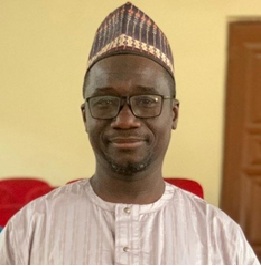
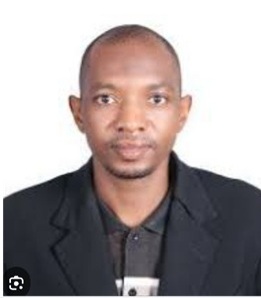
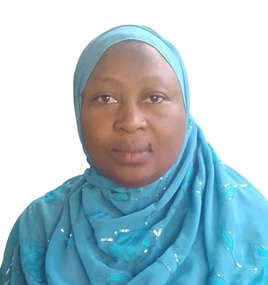
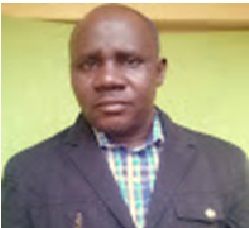
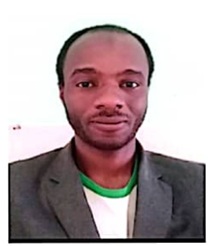
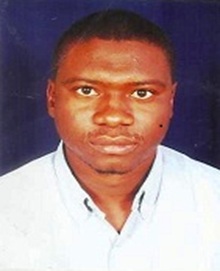
Academic Staff Profiles
Meet the dedicated academic staff advancing teaching, research, and innovation in Water Resources and Environmental Engineering.
Non-Teaching & Technical Support Staff
Laboratory technologists and technical support staff facilitating effective practical training and the efficient operation of laboratory facilities.
| S/N | Name | Qualification(s) | Rank |
|---|---|---|---|
| 1 | Abubakar Ramadan | B.Eng., COREN Reg., MNSE | Laboratory Supervisor |
| 2 | Muhammad Mahammad Aliyu | B.Eng. Civil | Laboratory Supervisor |
| 3 | Sadiq Aliyu Abba | B.Eng. Civil | Technologist II |
List of Administrative Staff
Administrative and support personnel handling department affairs and student services.
| S/N | Name | Qualification(s) | Rank |
|---|---|---|---|
| 1 | Zaharaddeen Yakubu | HND (2018) | Higher Executive Officer |
| 2 | Nafisa Balarabe | SSCE (2015) | Clerical Officer |
| 3 | Shafi’u Dahiru Umar | Diploma in Hausa/Islamic | Executive Officer (Admin) |
| 4 | Shehu Gambo Abubakar | Diploma in Law | Executive Officer (Admin) |
| 5 | Abdullatif Ibrahim Muhd | SSCE | Clerical Officer |
| 6 | Hamisu Muhammad | SSCE | Head Caretaker |